Testimonials
Services

Casual Chat — Career, SDE Life & More
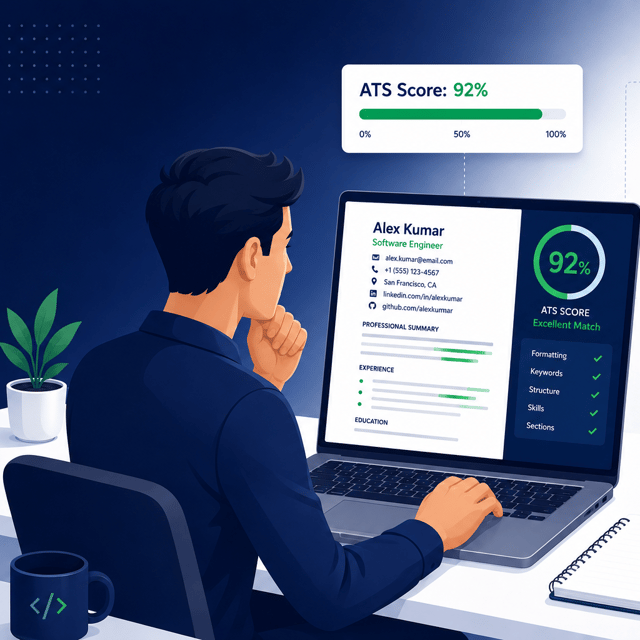
ATS Resume Review & Optimization
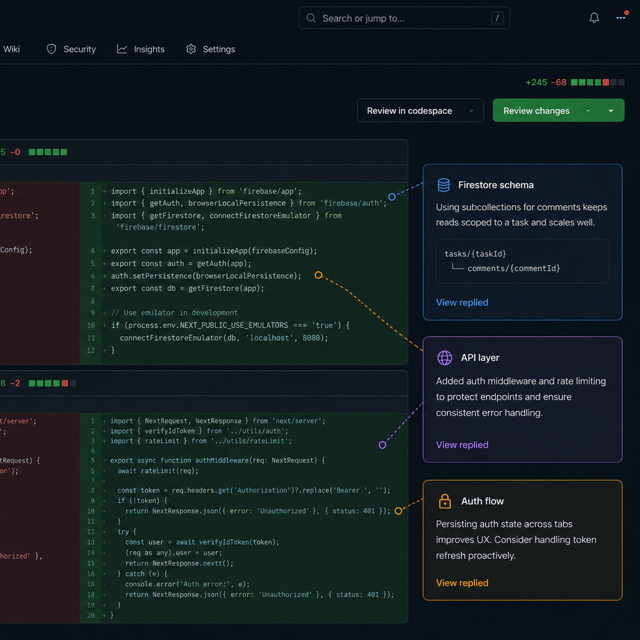
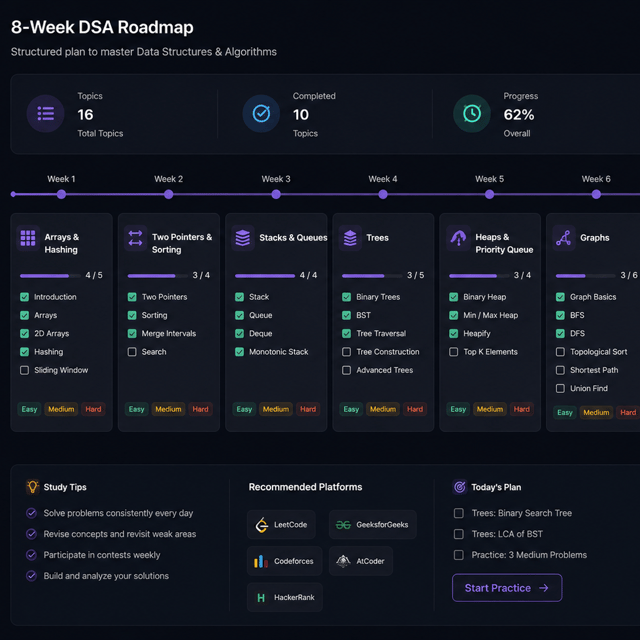
ResumeWorded ATS Score
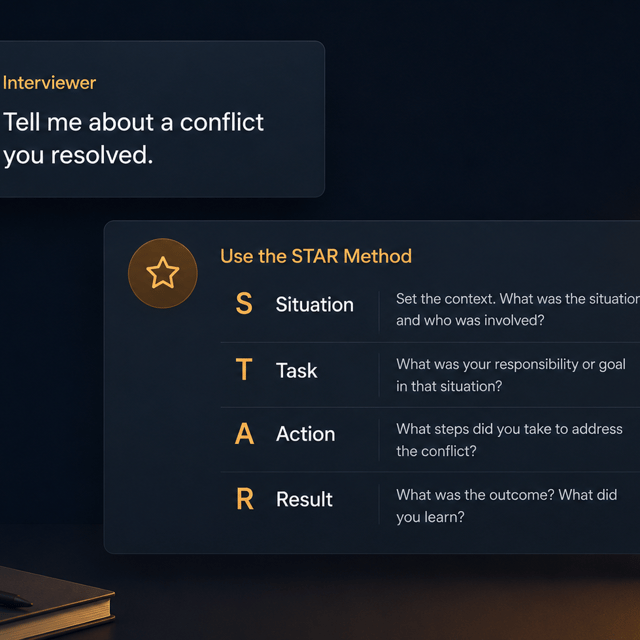
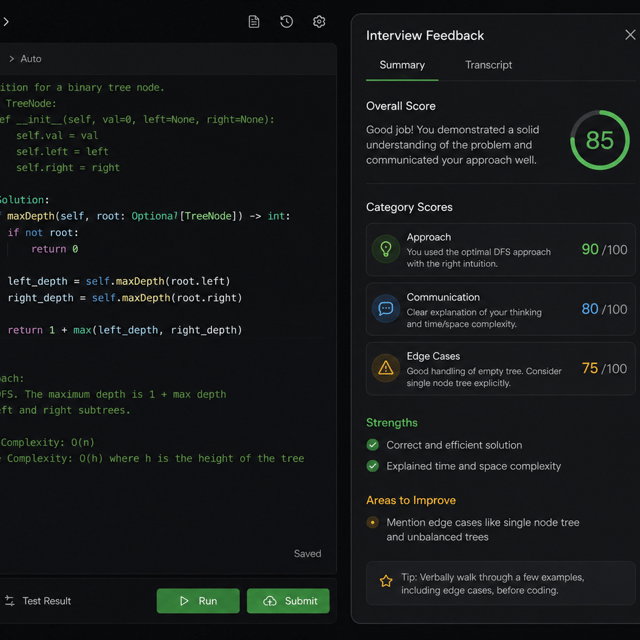
Mock DSA Interview | Product Company Style
Career Guidance for SDE & AI/ML Aspirants
About me
- Arman Gupta offers insightful, personalized resume reviews that enhance ATS performance. His guidance is practical, supportive, and highly recommended by users.
 AI-generated based on testimonials
Frequently asked questions
What is the meaning of an ATS friendly resume?
An ATS friendly resume is a resume that applicant tracking system (ATS) software can read and parse correctly. Most companies use an ATS to scan resumes before a human recruiter ever sees them, so the software must cleanly extract your name, contact details, skills, education, and experience. In practice, that means a simple single-column layout, standard section headings, no tables, text boxes, graphics, or fancy fonts, and keywords that match the job description. If the ATS misreads your file, your resume can get rejected even when you are a strong candidate.
How to make an ATS friendly resume?
Start with a clean, single-column format and standard headings like "Work Experience," "Education," and "Skills." Use a normal font, avoid tables, columns, icons, and images, and save the file as a PDF unless the job portal asks for another format. Content matters more than design: mirror the keywords from the job description in your skills and bullet points, start each bullet with a strong action verb, and quantify impact wherever possible, for example "reduced API latency by 40%." Keep it to one page as a fresher and at most two pages with experience.
Where can I get a free ATS friendly resume template?
The default resume templates in Google Docs and Microsoft Word are simple enough to pass most ATS, so you don't need to pay for one. When picking a free ATS friendly resume template, check that it has a single column, standard section headings, and keeps your contact details in the body rather than the header or footer, since some ATS skip those areas. Remember the template is only the skeleton — your ATS friendly resume template will only score well once you fill it with role-specific keywords and measurable achievements instead of generic responsibilities.
Are ATS friendly resume builders actually worth using?
They can be, with caveats. An ATS friendly resume builder is useful if you struggle with formatting, because it enforces clean, machine-readable structure. However, most builders produce generic-looking resumes, lock the best templates or PDF downloads behind a paywall, and none of them know the job you're targeting. Use the builder only for structure, then manually optimize the content — keywords from the job description, quantified impact, and crisp bullet points — because that is what actually decides whether you get shortlisted.
How to check your ATS resume score for free?
Several free tools let you upload your resume and get a score within seconds. To check your ATS resume score meaningfully, run the check against an actual job description rather than in isolation, because ATS matching is keyword-driven. A free ATS resume score checker will typically flag parsing errors, missing keywords, weak formatting, and vague bullet points. Treat the score as a diagnostic, not a verdict — rewrite the flagged bullets with specific, measurable points, re-upload, and keep improving until you cross 90.
What is a good ATS resume score?
On most tools, anything above 80 is considered good, and 90+ is the range where your resume is both easily parsed and well matched to the role. A score in the 70s usually means the ATS can read your resume but the keywords are thin, which is a common reason mid-70s resumes never get callbacks. Run an ATS resume score checker before each application, fix whatever it flags — missing role keywords, unquantified bullets, formatting issues — and aim to stay consistently in the 90+ band for competitive product company roles, without stuffing keywords just to hit 100.
Is there an ATS resume score checker on Naukri?
Naukri gives your profile a score and suggests improvements, but that score mainly reflects how complete your Naukri profile is — it is not the same as checking how a company's ATS will parse and rank your resume file. For an actual ATS check, use a dedicated ATS resume score checker that analyses parsing, formatting, and keyword match against a job description. The best approach is to use both: keep your Naukri profile complete so recruiters discover you, and keep the resume file itself ATS-optimized so it survives screening after you apply.
Does an ATS resume score checker with job description comparison give better results?
Yes, and it is the most useful type of check. An ATS resume score checker with job description matching tells you exactly which required skills and keywords are missing from your resume for that specific role, instead of giving a generic readability score. Paste the job description, note the gaps, and work the missing keywords naturally into your skills section and bullet points — but only where you genuinely have that experience. Candidates who tailor their resume to every job description this way consistently see better callback rates than those sending one generic resume everywhere.
How to prepare for a DSA interview?
Build your preparation around patterns instead of random problems. A solid sequence is arrays and hashing, two pointers and sliding window, stacks and queues, linked lists, binary search, trees and BSTs, heaps, recursion and backtracking, graphs with BFS and DFS, greedy, and finally dynamic programming. Solve two to three problems a day, revisit failed problems after a few days, and add timed practice plus a few mock DSA interviews, because explaining your thought process under pressure is half the evaluation. If you're targeting product companies, prioritise medium-level problems and be able to state the time and space complexity of everything you write.
How to answer DSA interview questions in a structured way?
Follow a fixed framework so you never go silent. Restate the problem, confirm constraints with a small example, state the brute force approach and its complexity, then improve it step by step towards the optimal solution while thinking out loud. Start coding only after the interviewer agrees with your approach, and finish by dry-running your code against normal and edge cases. Practising this flow on common DSA interview questions and answers — ideally speaking aloud or in mock interviews — makes the habit automatic on interview day.
What are the most common DSA interview questions and answers for freshers?
Fresher rounds stay close to fundamentals: reversing a linked list and detecting a cycle, Two Sum and its variants, valid parentheses, merging intervals, finding the middle of a linked list, level-order traversal of a binary tree, maximum subarray using Kadane's algorithm, and string problems like anagrams and palindromes. Memorising answers matters far less than explaining how you reached the solution — interviewers for fresher roles deliberately probe your reasoning, how you respond to hints, and whether you can analyse time and space complexity on the spot.
Are DSA interview questions and answers for experienced candidates different from freshers?
The core topics are the same, but the bar is noticeably higher. For experienced candidates, interviewers expect you to reach an optimal solution faster, handle follow-up variations without hints, and justify trade-offs between approaches — often with medium and hard problems in graphs, dynamic programming, and tree-based questions. You're also evaluated on how you'd apply these fundamentals to real production problems, and system design usually becomes a separate round. So keep the same fundamentals but practise at higher difficulty and under stricter time pressure.
Is preparing from a DSA interview questions PDF enough?
A PDF is good for revision, not for preparation. Reading a DSA interview questions PDF the night before an interview gives you familiarity, but interviews test whether you can derive a solution live, and that skill only comes from solving problems yourself — getting stuck, struggling, and working through it. Use the PDF to revise frequently asked questions and common patterns, but pair it with active problem solving on a coding platform, timed practice, and at least a couple of mock interviews where you explain your approach out loud.
Do companies ask different DSA interview questions in Java?
The problems themselves are language-agnostic — the same array, tree, and graph questions are asked no matter which language you use. When companies allow DSA interview questions in Java or any language you prefer, they are testing your problem-solving, not your syntax. What matters is fluency: know Java's collections well, including HashMap, HashSet, ArrayList, PriorityQueue, and Deque, write clean code quickly, and stick to one language throughout your preparation so you are never mentally translating ideas during the interview.
Are GeeksforGeeks DSA interview questions enough to crack product companies?
They are a strong starting point but not sufficient on their own. GeeksforGeeks DSA interview questions are valuable for company-wise archives, frequently asked problems, and interview experiences shared by candidates. The gap is that product company interviews increasingly ask unfamiliar twists on standard problems, so you also need pattern-based practice on a platform like LeetCode, timed problem solving, and mock interviews that train you to think aloud. Use GFG to understand what a target company tends to ask, then build enough depth to handle any variation they throw at you.